

19 Jul Paragliding in Taganana, the trade wind ridge in Anaga
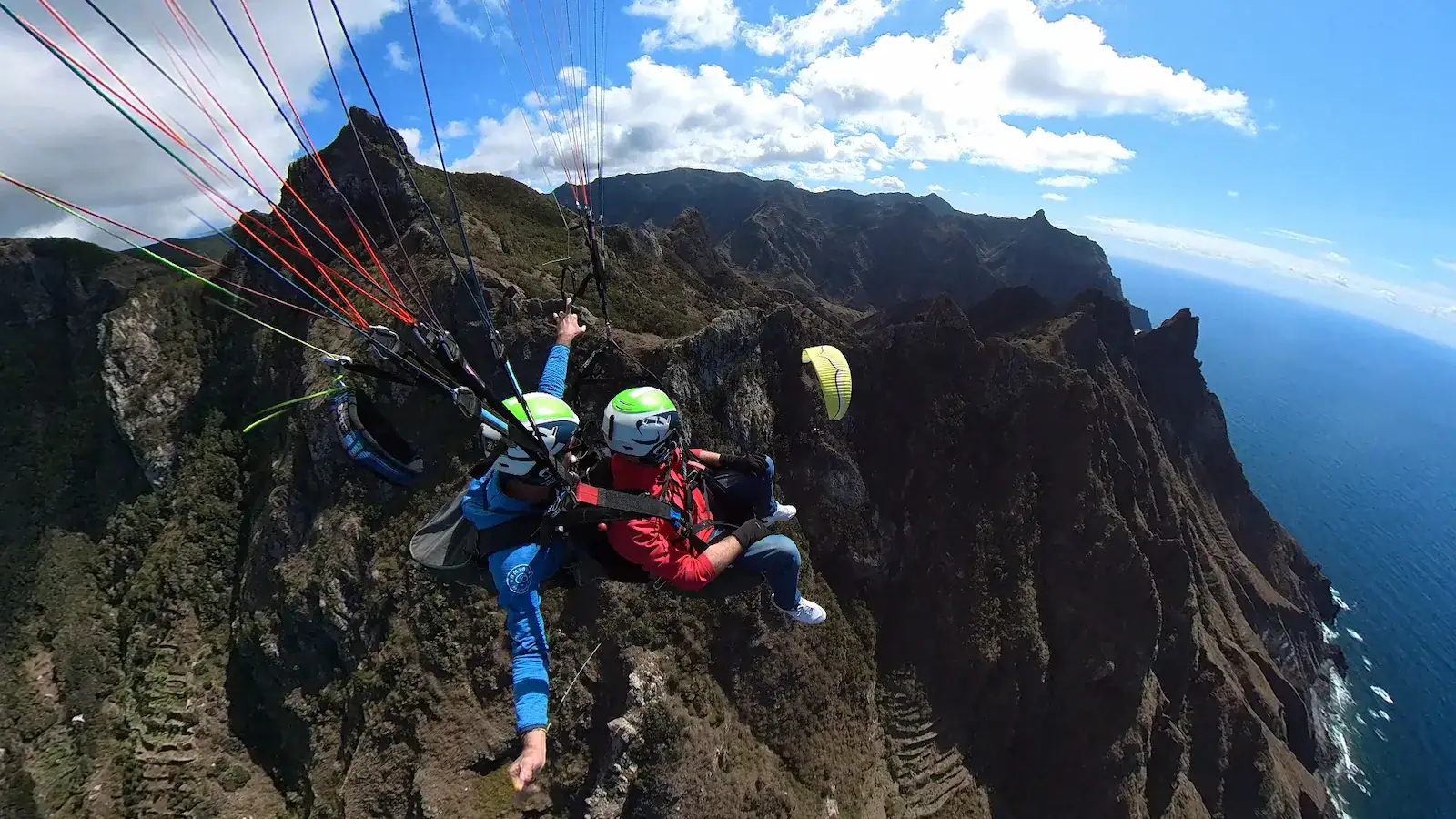
Taganana is one of the great free flight sites in northern Tenerife. The first flights there took place more than thirty-five years ago, and the ridge has held its reputation among the island’s pilots ever since.
It is worth saying up front. There is no flying in Taganana today. The take-off was on private land and the owner decided to close it. We hope it reopens soon. In the meantime, this page explains what flying there is like and why that ridge works the way it does.
The trade wind against the wall
The prevailing wind in the Canaries is the trade wind, and it comes in from the north-east. The Taganana ridge faces exactly that direction.
When the trade wind reaches those walls it has nowhere to go, so it rises. That rising air is what holds the glider up. No thermals are needed, there is no waiting for the sun to heat the ground and no hunting for bubbles. As long as the trade wind blows inside the window, the ridge works.
The window is narrow, between roughly 15 and 30 degrees. Outside it the air stops hitting the wall cleanly and the site does not work. Inside it, the site works almost all year round.
That makes Taganana different from anywhere else on the island. From the Teide you take off at 2,200 metres and fly on the height you already have. At Los Realejos you cross the Orotava valley down to the sea. Taganana is pure ridge flying, surfing the air that the walls themselves push upwards.
Ridge flying and thermal flying, and how they differ
Most paragliding flights depend on thermals, columns of warm air that lift off the ground when the sun heats the slope. They are the usual way of gaining height and they carry two drawbacks. They appear at certain times of day and they are irregular, with climbs and drops that the passenger feels.
Ridge flying works differently. The air rises because there is a wall in front of it, not because it is warm. That makes it far steadier, more predictable and, for a first-time passenger, considerably more comfortable. The day does not have to be sunny and it does not have to be midday. The trade wind has to blow inside its window.
That is why the northern sites do not compete with each other. You can fly at Los Realejos and you can fly at Taganana, because they do not depend on the same thing.
You take off at 300 metres and fly a good deal higher
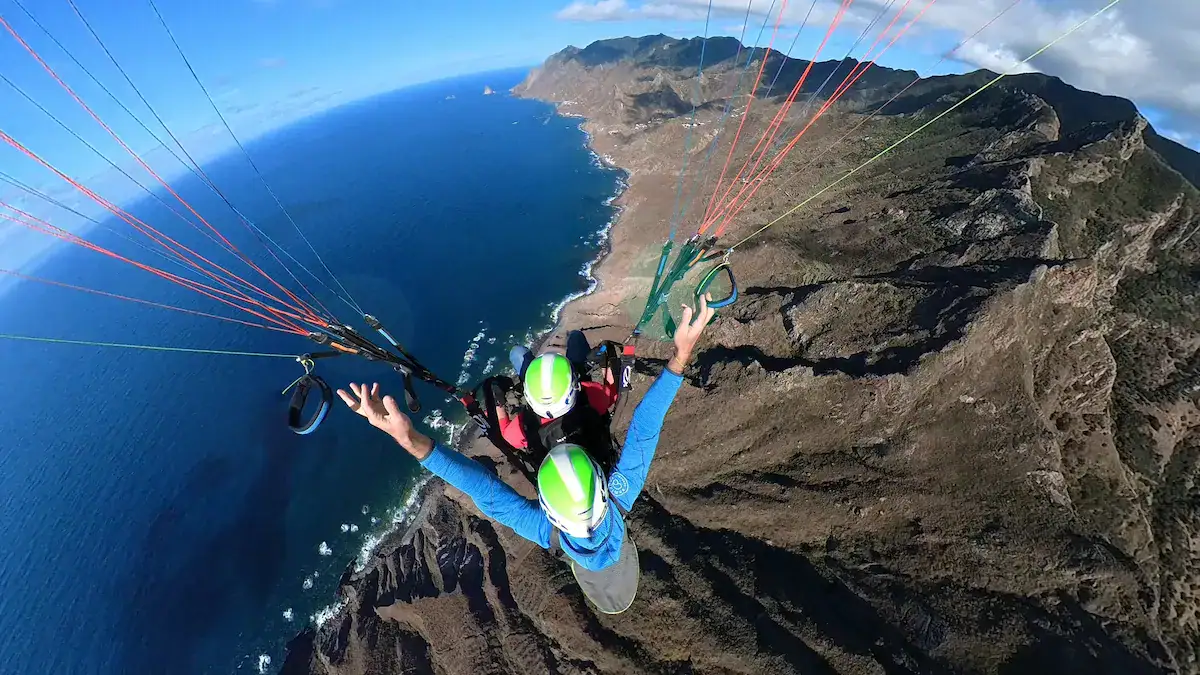
The take-off sits about 250 to 300 metres above the sea. That is the launch height, not the flying height.
With the trade wind coming in properly, climbing to 500 or 600 metres is normal, and in some conditions as high as 700. You gain height above the launch point, which is exactly what ridge flying allows and a high-altitude flight does not, where from the first second the only way is down.
A tandem flight in Taganana lasts between 20 and 30 minutes. It is not a descent, it is sustained time over the wall.
Eight kilometres of ridge
The Taganana ridge gives around eight kilometres of running, from Los Roques to Punta del Hidalgo.
Flying the whole of it is another matter. On a solo wing it gets done, and with an experienced pilot too. With a passenger, no. On a tandem the passenger sits in front and the pilot behind, and flying with someone else changes the responsibility. A tandem plan always runs from point A to point B, with no improvising along the way. That is a safety decision, not a limitation of the site.
Landings on the black sand of Benijo
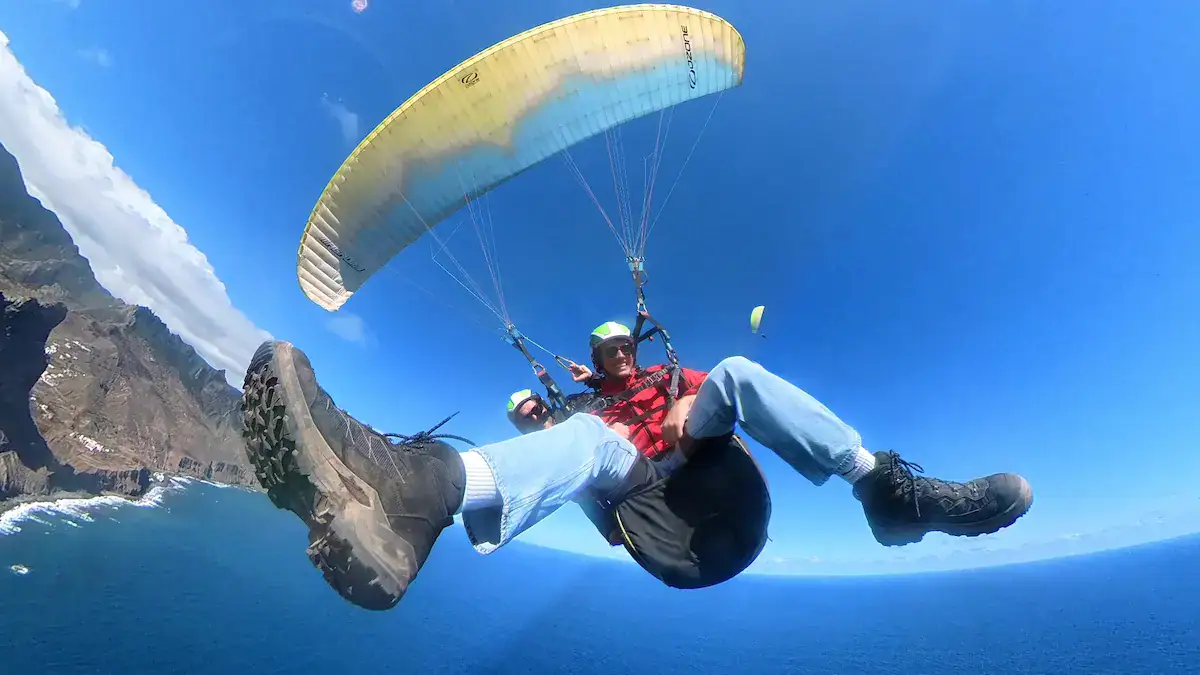
The usual landing is Benijo beach, dark volcanic sand with the sea stacks in front and the Atlantic breaking alongside. Roque de las Bodegas is the other option and gets used depending on the day.
Ending a flight on a beach like that is no small detail. At most flying sites you land in a field, and here the end of the flight is as much a part of the landscape as the beginning.
What you see from up there
The sea stacks rising out of the water, the laurel forest covering the ridges as one unbroken mass and the village far below, tiny among its terraces.
Anaga has been a Biosphere Reserve since 2015, and the same trade winds that make flying possible here are what keep that laurel forest alive, a cloud forest that vanished from the rest of Europe millions of years ago and survives here on the moisture that wind carries.
These are views that do not repeat anywhere else. The shape of Anaga, with its walls dropping sheer into the sea, has no equivalent in the rest of the archipelago.
Why it cannot be flown today
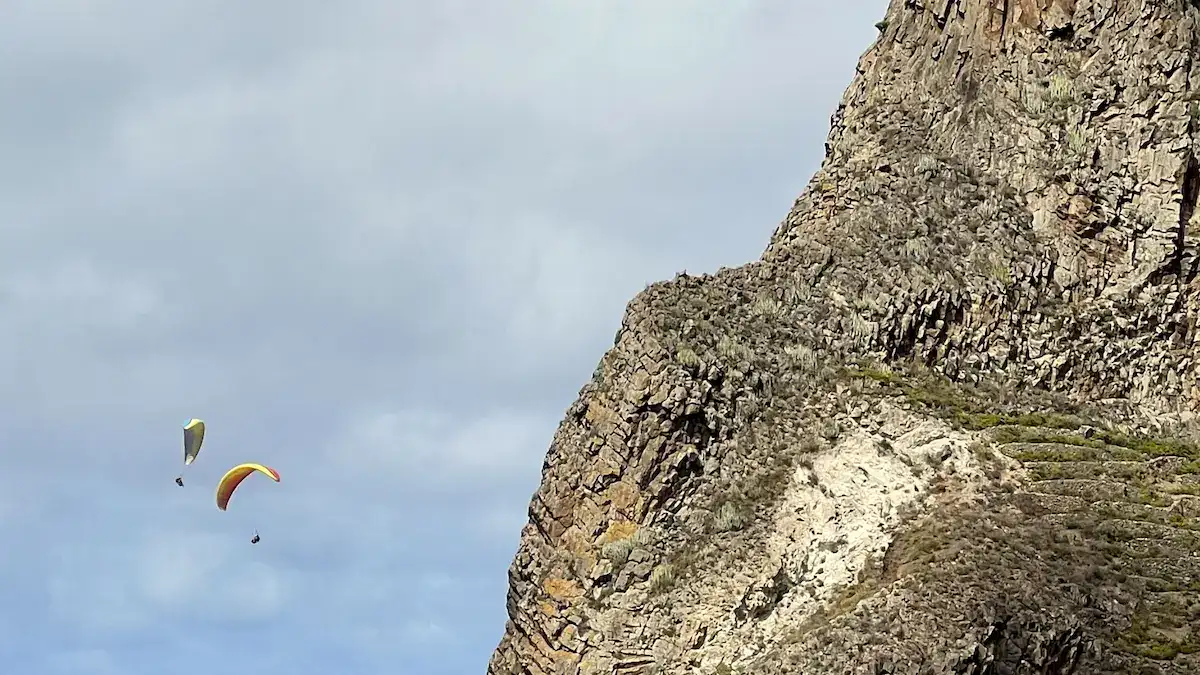
The take-off was on private land and the owner decided to close it. That was his decision and it is respected.
As things stand there are no flights in the area and no way of arranging them. We hope it becomes possible again sooner rather than later, because few places in Europe bring together what this ridge brings together.
Meanwhile, where you can fly in northern Tenerife
The north of the island has two other sites open, and the same trade wind that makes Taganana fly is what allows around 325 flyable days a year.
From the Teide you take off at 2,200 metres and land on the coast. From Los Realejos you fly over the Orotava valley down to El Socorro beach. They are two very different flights, and different again from what a ridge like Taganana gives.
See the paragliding sites in northern Tenerife