


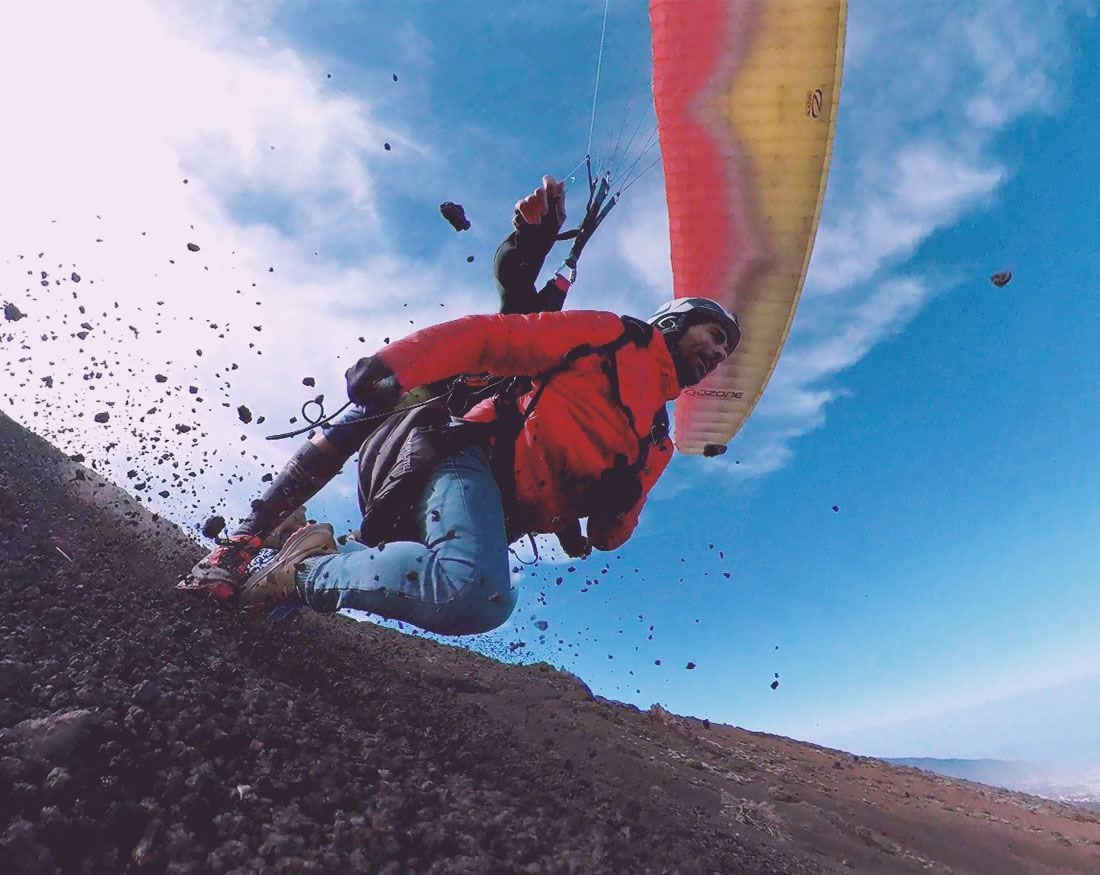
05 Aug Is Paragliding a Sport?
Practicing paragliding is undoubtedly considered a full-fledged aerial sport, and this classification is based on several aspects involving physical, technical, and mental skills. The following outlines the reasons why paragliding is considered a sport, its main characteristics, and its impact on the health and wellbeing of those who practice it.
Definition and Classification
It is defined as an aerial sport in which participants fly using a wing or flexible canopy without a motor, harnessing air currents to stay aloft and move through the air. It is also regulated by national and international sports federations and organizations, which establish rules and categories for its practice.
Paragliding Sport Components
Physical Skills:
- Physical condition: Paragliding requires a good physical condition for take-off, control of the wing in the air and landing.
- Endurance: Flights can last several hours, requiring muscular endurance and strength, especially in the trunk and legs.
Technical Skills:
- Flying technique: Involves knowledge of aerodynamics, meteorology and air navigation.
- Equipment management: Knowing how to prepare and maintain equipment is crucial for safety and performance.
Mental Skills:
- Concentration: Maintaining focus during flight is essential for responding to changing air conditions and making quick decisions.
- Decision-making: Constantly assessing conditions and planning safe and efficient routes is critical.
Competitive Modalities
Paragliding is not only a recreational sport, but also has a strong competitive component, with various modalities:
- Cross-country (XC): Distance competitions where riders cover long distances taking advantage of thermal and dynamic currents.
- Acrobatics: Competitions of aerial manoeuvres and acrobatics, judged by their difficulty and execution.
- Precision flying: Competitions in which pilots must land at a specific point as accurately as possible.
- Hike Fly: Competitions combining mountaineering and flying, where pilots must climb on foot before taking off.
Health and Wellness Benefits
Physical:
- Cardiovascular exercise: Activities such as take-off and wing control in flight improve cardiovascular health.
- Muscle strengthening: Paragliding and aerial manoeuvres strengthen various muscle groups.
Mental:
- Stress reduction: Flying provides a sense of freedom and relaxation that can reduce stress and anxiety.
- Improved concentration and decision-making: The need to maintain focus and constantly assess conditions improves cognitive skills.
Social:
- Community and camaraderie: Participating in paragliding allows you to meet other enthusiasts and be part of a global community.
Ultimately, it is a complete sport that combines physical, technical, and mental elements. From recreational flying to its competitive side, it offers multiple benefits for health and wellbeing. What’s more, the thrill of flying, the technical skill required, and the connection with nature make paragliding a unique and exciting sporting activity. That’s why, for those seeking a mix of adventure and challenge, paragliding is an excellent choice that enriches both body and mind.